
Best Siding Options for Coastal Homes in North Carolina
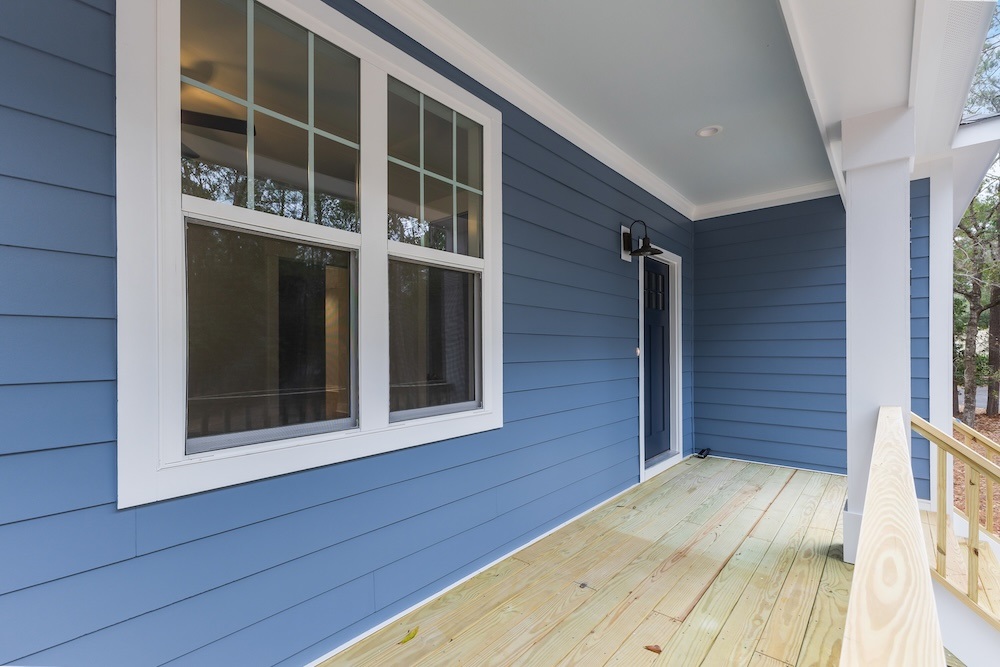
Quick Summary
-
The best siding options for coastal homes in North Carolina are materials that resist moisture, tolerate salt air, perform well in high winds, and reduce long-term maintenance.
-
Fiber cement, composite or PVC-based products, and properly detailed engineered wood consistently outperform traditional wood and basic vinyl in coastal conditions.
-
The right choice depends on your lot exposure, maintenance expectations, and whether you are building a long-term or forever home.
Why Siding Choice Is Especially Important in Coastal North Carolina
Coastal North Carolina presents a demanding environment for exterior materials. Homes in Wilmington, Leland, Southport, Oak Island, and surrounding areas face persistent humidity, salt carried by coastal air, intense sun, and wind-driven rain.
When siding is not chosen with these conditions in mind, homeowners often experience:
-
Premature paint failure
-
Swelling, warping, or cracking
-
Moisture intrusion behind walls
-
Higher maintenance and repair costs
This is why siding decisions deserve the same level of planning as layout, foundations, and roofing. As discussed in Mistakes to Avoid When Building Your Custom Home in NC, exterior material choices made too late often lead to long-term regret:
What Makes Siding “Coastal-Ready”?
Before comparing specific products, it helps to understand what siding must do well along the coast.
Effective coastal siding should:
-
Resist moisture absorption
-
Handle salt air without rapid deterioration
-
Stay dimensionally stable through humidity swings
-
Perform well in high winds and storms
-
Hold paint or finish under prolonged sun exposure
The Federal Emergency Management Agency (FEMA) emphasizes durable exterior materials and proper moisture detailing as key strategies for reducing storm and wind-related damage in coastal regions:
Fiber Cement Siding for Coastal Homes
Fiber cement siding is one of the most commonly recommended options for coastal homes in North Carolina.
Why fiber cement performs well:
-
Highly resistant to moisture and rot
-
Not attractive to insects
-
Maintains dimensional stability in humid climates
-
Holds paint longer than traditional wood
For homeowners planning a long-term home, fiber cement often provides the best balance between appearance, durability, and maintenance. It aligns well with the long-term livability principles discussed in Custom Home vs Existing Home: What’s the Best Choice in 2026?
Considerations:
-
Heavier material that requires experienced installation
-
Repainting is still required over time
-
Higher upfront cost than basic vinyl
Engineered Wood Siding in Coastal Settings
Engineered wood siding has improved significantly and can be a good option in certain coastal conditions.
Advantages:
-
Lighter than fiber cement
-
Clean, consistent appearance
-
Often lower upfront cost
Important limitations:
-
Requires careful flashing and moisture control
-
Ongoing paint and sealant maintenance
-
Better suited for protected lots than highly exposed waterfront sites
This option may work well for homes set slightly inland or in neighborhoods with reduced wind exposure. Proper detailing is critical, which is why early design coordination matters, as outlined in How to Design a Custom Home from Scratch in North Carolina.
Vinyl Siding and Its Limitations Near the Coast
Vinyl siding remains widely used, but it has clear limitations in coastal environments.
Pros of Vinyl
-
Lower upfront cost
-
Minimal repainting
-
Wide range of colors
Cons of Vinyl
-
Can loosen or crack in high winds
-
May fade or warp under intense sun
-
Less resistance to wind-driven rain
-
Often feels less substantial on custom homes
For budget-conscious builds, vinyl may be considered, but many homeowners planning a forever home choose more durable alternatives to avoid future maintenance issues.
Composite and PVC-Based Siding Options
Composite and PVC-based siding products are increasingly popular in coastal custom homes.
Key benefits:
-
Excellent moisture resistance
-
No rot or swelling
-
Very low maintenance
-
Long-term appearance stability
These materials are often used:
-
On high-exposure elevations
-
As accent siding
-
In trim-heavy or modern coastal designs
While material costs are higher, many homeowners find the reduced maintenance aligns with long-term planning goals discussed in Top 5 Things That Influence Custom Home Costs in NC.
How Siding Choice Affects Maintenance and Long-Term Cost
Siding decisions directly affect ownership cost over time.
Lower-maintenance options:
-
Fiber cement
-
Composite and PVC products
Higher-maintenance options:
-
Traditional wood siding
-
Poorly detailed engineered products
The National Association of Home Builders (NAHB) consistently notes that material durability plays a significant role in lifetime ownership cost, not just initial construction expense.
For many homeowners building in coastal North Carolina, minimizing exterior upkeep is just as important as initial budget control.
Why Installation and Moisture Management Matter
Even the best siding material can fail if moisture management details are overlooked.
Critical details include:
-
Proper flashing at windows and doors
-
Correct water-resistive barriers
-
Adequate ventilation behind siding
-
Corrosion-resistant fasteners
The U.S. Department of Energy highlights that exterior assemblies, including siding, contribute directly to indoor comfort and energy performance when paired with proper insulation and air sealing.
Local coastal experience matters because these details are shaped by humidity, wind, and exposure unique to this region.
You can see how siding materials and detailing come together in real projects on our portfolio.
Coastal Siding Comparison Table
Frequently Asked Questions
What is the best siding for coastal homes in North Carolina?
Fiber cement and composite or PVC-based products consistently perform best in coastal conditions.
Is fiber cement worth the extra cost?
For homeowners planning to stay long-term, the durability and reduced maintenance often justify the higher upfront cost.
Does siding choice affect comfort or energy efficiency?
Yes. Exterior materials play a role in air sealing and thermal performance. ENERGY STAR notes that well-designed exterior assemblies support consistent indoor comfort.
Can siding mistakes be fixed later?
Some issues can be addressed, but many problems are far easier and less expensive to avoid during design and construction.
Choosing the Right Siding for Your Custom Coastal Home
The best siding choice balances performance, maintenance, appearance, and long-term value. In coastal North Carolina, materials that manage moisture and resist salt air consistently perform better over time.
At Brandon Construction Group, we help homeowners evaluate siding options based on real coastal conditions, long-term livability, and maintenance expectations.
If you are planning a custom home and want exterior materials that hold up over time, you can:
-
Learn about our approach: https://www.brandonconstructiongroup.com/about
-
Explore real coastal projects: https://www.brandonconstructiongroup.com/portfolio
-
Review floor plan options: https://www.brandonconstructiongroup.com/plans
-
Start the conversation: https://www.brandonconstructiongroup.com/contact
Good siding decisions are not about trends. They are about durability, comfort, and peace of mind for years to come.